Your Gut Is Keeping You Awake: The Microbiome-Sleep Connection
Medically reviewed for accuracy by Dr. Bruce Rubinowicz, Board-Certified Neurologist & Sleep Medicine Specialist
Quick Answer
Your gut and brain are wired together through the vagus nerve, the immune system, and the chemistry of your microbes, and that conversation shapes how you sleep. About 90 percent of the body's serotonin is made in the gut, upstream of melatonin, so the microbiome helps control the raw-material supply chain for sleep, though indirectly, since gut serotonin does not cross into the brain. The most reliable levers are food: more fermentable fiber and fermented foods, and closing the kitchen about three hours before bed.
The Five Hundred Million Neurons You Never Think About
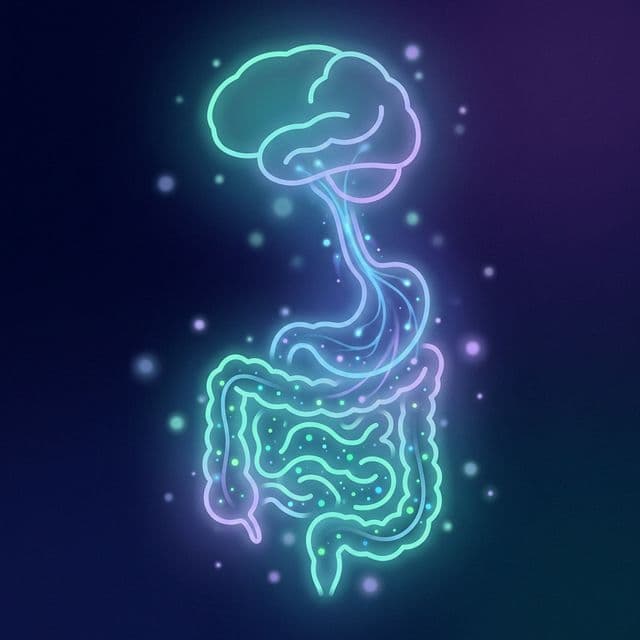
Somewhere below your sternum sits a nervous system substantial enough that researchers gave it its own name. The enteric nervous system runs the length of your gastrointestinal tract, contains roughly 500 million neurons, and manufactures more neurotransmitters than the brain you actually identify with. It also hosts trillions of bacteria, and that crowd has opinions about how you are going to sleep tonight. Clinicians call the whole arrangement the gut-brain axis, a term that rather undersells how chatty the connection is. A widely cited 2012 review in Nature Reviews Neuroscience by Cryan and Dinan laid out the emerging evidence that the gut microbiota can influence the brain and behaviour, communicating along this axis through the vagus nerve, the immune system, and tryptophan metabolism.
This is worth raising because of a pattern that shows up constantly. Someone is frustrated that the blackout curtains, the expensive mattress, and the supplement drawer have accomplished nothing, and when the topic of digestion comes up they react as if the subject has changed. It has not changed. The gut and the brain are wired together through the vagus nerve, through immune signaling, and through the chemistry of the microbes themselves, and when that conversation goes badly, sleep is often the first casualty.
Where Serotonin Actually Gets Made
Here is the fact that surprises almost everyone: roughly 90 percent of the body's serotonin is produced in the gut, much of it by specialized cells in the intestinal lining called enterochromaffin cells. A 2023 review in Food Science and Nutrition puts the figure the same way, noting that enterochromaffin cells store on the order of 90 percent of the body's serotonin. Serotonin matters for sleep because it sits upstream of melatonin, the hormone the pineal gland releases as evening light fades.
Now for an honest caveat, because the wellness internet tends to flatten this story. Serotonin made in the gut does not simply float upstairs and become brain melatonin; the blood-brain barrier sees to that, and that same review notes that peripheral serotonin cannot cross it, so the brain has to synthesize its own. What the gut controls is the supply chain. Dietary tryptophan arrives with your protein. Gut bacteria influence how much of it survives the journey and gets converted along the serotonin pathway rather than siphoned off into other chemistry. The vagus nerve, meanwhile, carries running commentary on all of it back up to the brain. Squeeze that supply chain at any point and the brain has less raw material to work with when evening comes. The plumbing is indirect. The influence is real.
Good Tenants and Difficult Tenants
When researchers began comparing the microbiomes of good and poor sleepers, certain residents kept landing on the same sides of the ledger. Lactobacillus rhamnosus appears to nudge production of GABA, the nervous system's main braking signal. Bifidobacterium longum has been associated with lower cortisol and less anxious arousal. Lactobacillus helveticus improved sleep quality scores in early research. And Bacteroides fragilis seems to converse directly with circadian clock genes, which is a remarkable hobby for a single-celled organism.
Then there are the difficult tenants. Clostridium species, in excess, churn out excitatory compounds. Desulfovibrio, which sounds like a metal band and behaves like one, has been linked to gut inflammation and fragmented sleep. Klebsiella overgrowth is associated with elevated nighttime cortisol, which is exactly the hormone you do not want surging at 3 am.
A hedge is warranted here. Much of this evidence is correlational, plenty of it comes from small studies or animal work, and the honest answer is we are still learning which strains matter most and in what proportions. But the direction of the findings is consistent. A small 2019 study in PLOS ONE by Smith and colleagues, for instance, found that greater overall gut microbiome diversity was associated with better sleep efficiency and longer total sleep time and with less time awake after falling asleep, though with 26 participants it is a signal worth following rather than a settled result. The composition of your gut community tracks with how you sleep, and you happen to have more influence over that community than over almost any other input to your night.
Inflammation Works the Night Shift
The mechanism most worth worrying about here is the inflammatory loop. When the microbial community falls out of balance, a state we call dysbiosis, the intestinal barrier can become more permeable than it should be. Fragments of bacterial cell walls, endotoxins known as LPS, slip into the bloodstream where they have no business being, and the immune system responds the way immune systems do, by releasing pro-inflammatory cytokines.
Those cytokines fragment slow-wave sleep, the deep restorative stage the body reserves for physical repair. And here the loop closes in an ugly way, because sleep deprivation itself damages the gut barrier, which worsens the dysbiosis, which produces more inflammation, which fragments more sleep. People caught in this cycle tend to describe an exhaustion that no amount of time in bed seems to touch. They are not imagining it.
Feed the Bacteria You Want More Of
The bias worth owning freely is food before capsules. The bacteria associated with better sleep eat fermentable fiber, and you can buy their groceries at any supermarket:
Fiber may pay off faster than you would expect. A small randomized crossover study from Columbia, published in the Journal of Clinical Sleep Medicine in 2016, found that greater fiber intake predicted more time in deep slow-wave sleep, while more saturated fat and sugar tracked with lighter, more fragmented nights, and the dietary differences showed up quickly. Very few sleep interventions move that fast, though as a small controlled-feeding study it is best read as a promising lead rather than the last word.
If you want a probiotic capsule on top of the food, fine, and morning on a relatively empty stomach is a reasonable time to take it. Just do not let the capsule substitute for the vegetables. A probiotic without fiber is a houseguest you invited and then forgot to feed.
The Clock on Your Last Meal
Timing is the cheapest intervention in this entire article. Between meals, the gut runs a housekeeping program, a slow sweeping wave of contractions that clears debris and gives the lining a chance at repair. Late eating keeps interrupting the janitor. A reasonable rule of thumb is to close the kitchen about three hours before bed, which has the side benefit of sparing you the reflux and the blood sugar wobble that late meals invite.
There is a corollary worth knowing: digestive capacity is not constant across the day. Enzyme output and the metabolic handling of food are generally stronger at midday, so if one meal is going to be the big one, lunch is the best candidate. The 9:30 pm feast followed by an 11 pm bedtime asks the gut to work overtime, and overtime work is rarely careful work.
A Word on Tart Cherry and Cannabinoids
Montmorency tart cherry is one of the few ingredients that genuinely straddles the gut-sleep border. Its polyphenols serve as food for beneficial bacteria, its anthocyanins have been studied for calming gut inflammation, and in one small trial, participants taking tart cherry gained over an hour of additional sleep time. That is a single small trial and worth treating as such, but the mechanism is plausible and the food itself is about as benign as they come.
Cannabinoids intersect with the gut as well. CB2 receptors are densely expressed along the gastrointestinal tract, and CBN has shown anti-inflammatory effects on intestinal cells in early research. That pairing is the thinking behind the Risachi's tart cherry and CBN sleep gummies gummies, which combine 20mg of CBN and 15mg of CBG with 500mg of Montmorency tart cherry as a concentrated 10:1 extract, a formula designed to support the gut environment alongside the wind-down itself. For anyone keeping score, there is no melatonin in it, which counts as a feature; the aim is to support your own production chain rather than bypass it.
Two Weeks of Honest Notes
If any of this resonates, run the experiment on yourself. Add one fermented food a day, nudge your fiber toward 25 or 30 grams, close the kitchen three hours before bed, and keep brief notes on what you ate and how you slept. Two weeks is usually enough to tell whether the needle is moving, because the gut microbiome turns over quickly. That speed is bad news when you neglect it and very good news the moment you stop.
One closing word of caution. If your sleep stays broken despite genuinely better eating, or if gut symptoms such as persistent bloating, pain, or changed bowel habits travel alongside the insomnia, that combination deserves a proper medical workup rather than another supplement. Talk to your doctor. The microbes will still be there when you get back, doing their strange and consequential work.
Sources
Frequently Asked Questions
How does gut health affect sleep?
The gut and brain communicate through the vagus nerve, the immune system, and the chemistry of gut microbes. Your microbiome influences how much dietary tryptophan gets converted along the serotonin pathway, and serotonin sits upstream of melatonin, so it helps control the raw-material supply chain for sleep. When the microbial balance is off, inflammation can fragment deep sleep, and poor sleep in turn damages the gut barrier, forming a loop.
Is it true that 90 percent of serotonin is made in the gut?
Yes, roughly 90 percent of the body's serotonin is produced in the gut, much of it by enterochromaffin cells in the intestinal lining. One honest caveat: that gut serotonin does not simply travel up and become brain melatonin, because the blood-brain barrier blocks it. What the gut controls is the supply chain, how much tryptophan survives and gets converted, while the brain synthesizes its own. The influence is real but indirect.
What foods improve gut health for better sleep?
Feed the bacteria associated with better sleep with fermentable fiber: garlic, onions, and leeks; asparagus, bananas, and oats; flaxseed and chia; plus fermented foods like kimchi, kefir, and sauerkraut. A small controlled study found greater fiber intake predicted more deep slow-wave sleep, while more saturated fat and sugar tracked with lighter, more fragmented nights, and the differences showed up quickly.
How long before bed should I stop eating?
A reasonable rule of thumb is to close the kitchen about three hours before bed. Between meals the gut runs a housekeeping wave that clears debris and lets the lining repair, and late eating keeps interrupting it, while also inviting reflux and a blood-sugar wobble. If one meal is going to be the big one, make it lunch, when digestive capacity is generally strongest.

From Risachi
Sleep Collection Gummies
20mg CBN + 15mg CBG + 500mg Montmorency tart cherry per serving. Melatonin-free.
- Melatonin-free — no morning fog
- Third-party lab tested, COA published
- Vegan, non-habit forming
$39.9924 Gummies per bottle
60-day money-back guarantee · Bundle savings available